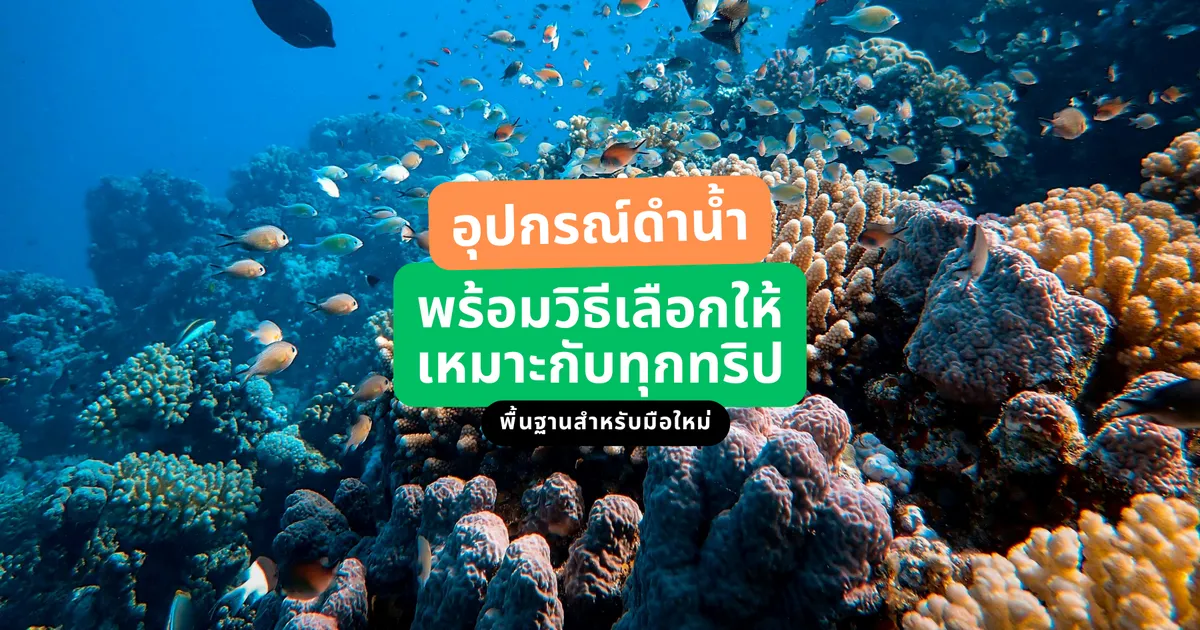
Are you currently planning a snorkeling or diving trip? Before you pack your bags, the first thing you should consider is high-quality diving equipment. Having the right gear not only enhances your enjoyment but ensures your safety like a true professional. No matter where you dive in Thailand, your equipment should be a top priority.
(For those who want to skip the reading and jump straight to shopping, 👉 [Click here to visit PRODIVE IMAGING: A fully comprehensive and certified diving equipment store] to elevate your diving experience to an international standard!)
Choosing the Right Gear is Half the Battle
Anyone who goes snorkeling regularly understands that having gear suited to your specific needs drastically increases your comfort and peace of mind. Here is why it matters:
- Enhanced Safety: A high-quality snorkel tube and a standardized life jacket boost your confidence in the water.
- Crystal Clear Vision: A good diving mask ensures you won’t miss any of the stunning underwater scenery.
- Energy Efficiency: The right fins act as your underwater wings, allowing you to swim effortlessly.
- Unforgettable Memories: A quality underwater camera allows you to capture the vibrant marine life to share with friends.
Essential Snorkeling Gear for Beginners
1. Diving Mask
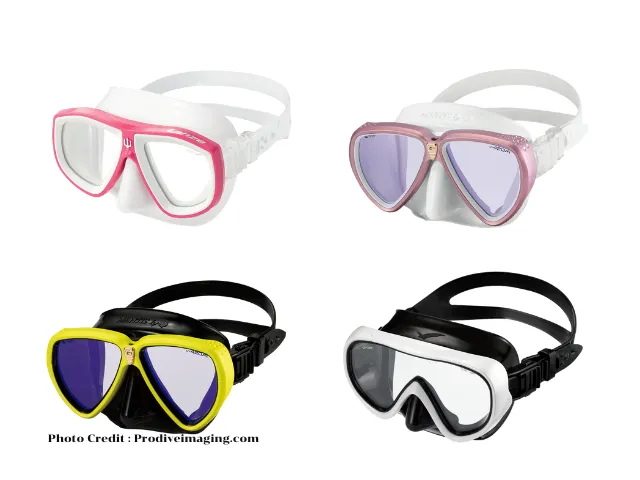
A great mask allows you to see the underwater world clearly. They come in single-lens and dual-lens designs. When choosing a mask, prioritize the silicone material. It must be:”
- Soft, clear, and comfortable on the face.
- Capable of providing your desired field of vision.
- Equipped with a high-quality, adjustable strap.
- Made from hypoallergenic materials to prevent irritation.
- Fitted with clear, distortion-free lenses (preferably Tempered Glass). 👉 View high-quality masks here: [Diving Masks]
2. Snorkel (Breathing Tube)
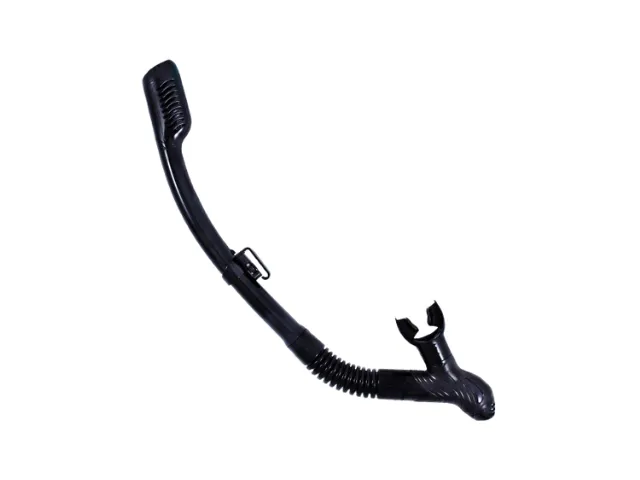
Beginners should always opt for a Dry or Semi-Dry snorkel to prevent swallowing seawater.
- Dry Snorkel: Features an automatic float valve that seals the tube when submerged or hit by a wave. Highly recommended for beginners.
- Semi-Dry Snorkel: Features a splash guard at the top to deflect waves but lacks the fully sealing valve. Water can enter if you dive below the surface. Best for intermediate snorkelers.
- Traditional (J-Tube) Snorkel: Has no splash or valve protection. Not recommended for beginners, as it requires the skill to forcefully blow water out of the tube.
3. Fins
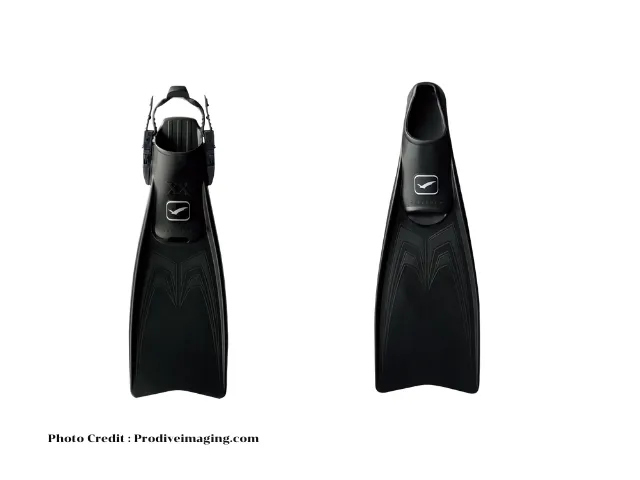
Fins give you the propulsion you need. Here is a quick breakdown:
- Full Foot: Easy to slip on, lightweight, and perfect for snorkeling.
- Open Heel: Requires diving booties, heavier, and generally used for Scuba diving.
Blade Length:
- Short Fin: Requires less leg strength, highly maneuverable, ideal for snorkeling.
- Long Fin: Requires more effort but offers powerful propulsion, better suited for freediving or deep dives.
Blade Design:
- Split Fin: Slices through the water, reducing leg fatigue. Great for snorkeling.
- Paddle Fin: A solid blade that provides excellent speed but requires strong legs.
4. Life Jacket for Snorkeling

A non-negotiable safety item for beginners or weak swimmers. A life jacket keeps you buoyant, entirely removing the fear of sinking. Choose a jacket that fits snugly but doesn’t restrict your breathing. Sizes are available for both adults and children.
5. Dive Wear (Rashguard & Wetsuit)
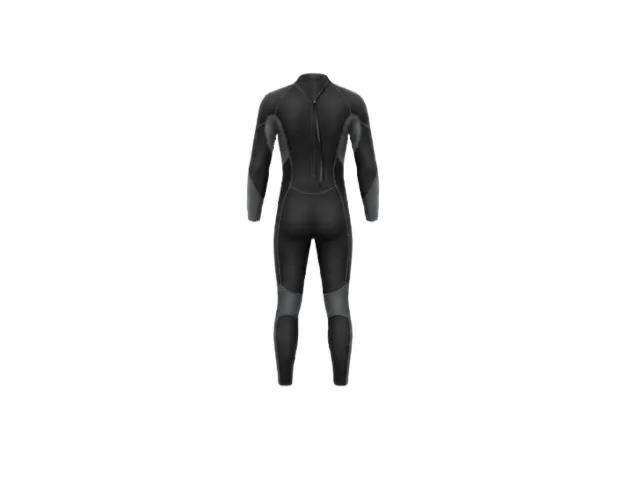
Dive wear protects your body from temperature drops and environmental hazards.
- Rashguard: Made of stretchy, quick-drying spandex. It provides UV protection and basic defense against jellyfish. Highly recommended for hot climates and shallow snorkeling in Thailand.
- Wetsuit: Thicker neoprene suits designed for thermal insulation. They offer superior protection against scrapes from rocks or corals. Ideal for all types of diving, especially Scuba.
6. Underwater Cameras

To capture your underwater memories, here are the top 3 camera types:
- Action Cameras (Best for Snorkeling): Small, lightweight, and waterproof (either natively or with a housing). They shoot in Full HD or 4K and are very budget-friendly. 👉 View models: [Action Cams & Accessories INSTA360, GoPro, AOI]
- Compact Cameras: Larger sensors than action cams, providing superior color and image quality. They require a dedicated waterproof housing and are slightly heavier. 👉 View models: [Compact Cameras e.g., OM SYSTEM TOUGH TG7]
- DSLR / Mirrorless Cameras: Deliver professional-grade image quality but are heavy, expensive, and require bulky underwater housings. Not recommended for snorkeling beginners.
Basic Equipment for Scuba Diving
Once you fall in love with snorkeling, the natural next step is Scuba diving. Exploring the depths requires specific skills, formal training, and advanced life-support equipment. Here is a brief overview of the essential Scuba gear:” (Note: If you want an in-depth guide, read our full article: 👉 Scuba Diving Gear: A Beginner’s Guide on How to Choose and Maintain Your Equipment)
1. BCD (Buoyancy Control Device)
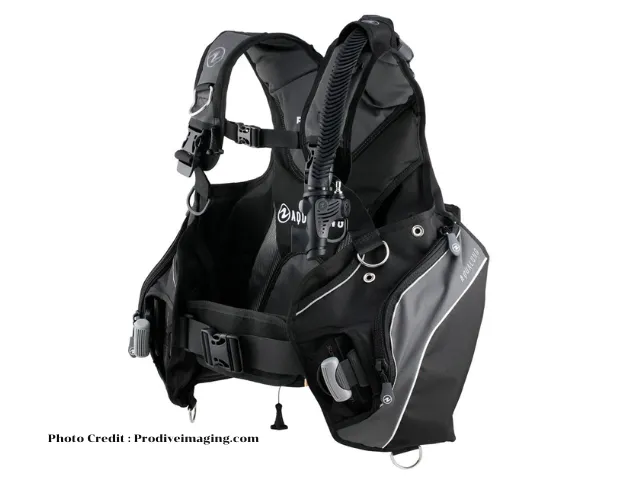
This is a vest-like device that allows a diver to finely tune their buoyancy underwater, helping them ascend, descend, or hover effortlessly. It connects directly to the air tank.
2. Regulator
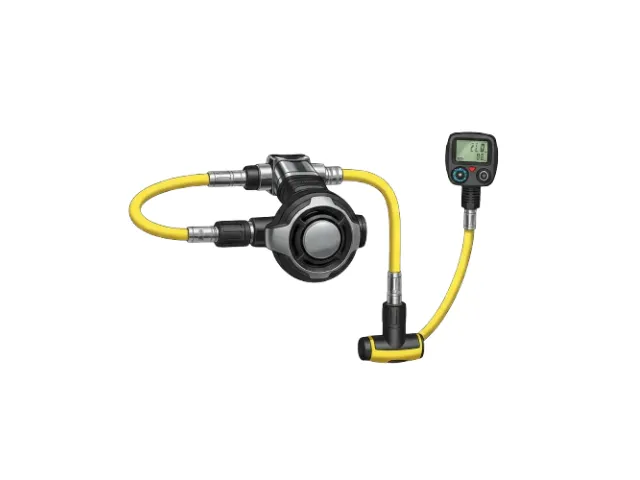
The lifeline of a diver. It connects to the air cylinder and reduces the highly pressurized air inside the tank to a breathable ambient pressure, delivering air straight to the diver’s mouth.
3. Tank / Cylinder

The heavy metal container that holds compressed breathing air. They are typically made from aluminum or steel, which affects the diver’s overall weight and buoyancy.
4. Dive Computer

A wrist-worn or console device that tracks your depth and bottom time in real-time. It calculates your No-Decompression Limit (NDL) and dictates safe ascent speeds to prevent decompression sickness.
5. (Dive Light)

A device called a flashlight, but it isn’t used only for night diving. It is also used to illuminate areas when diving into underwater caves, rock crevices, and coral formations.
It helps restore the vivid colors of the underwater world, which tend to fade as depth increases and natural light diminishes. 🌊🔦
Many basic snorkeling items, such as your Tempered Glass Mask, Wetsuit, and sometimes Fins, can easily cross over and be used for your Scuba diving adventures!
Whether you are skimming the surface or exploring the deep, proper equipment is your best underwater companion. We hope this guide helps you choose the perfect gear for your next ocean adventure.
Looking for the perfect place to test out your gear? Join us for an unforgettable, fully equipped coral reef snorkeling trip!
👉 [Explore Our Complete Samaesarn Snorkeling Packages Here]”
FAQ: Basic Diving Gear for Beginners
As a beginner, should I buy or rent my diving gear?
If you are just starting, renting heavy equipment is cost-effective and convenient. However, for hygiene and comfort, we highly recommend purchasing these 3 items for yourself: 1. Mask, 2. Snorkel, 3. Rashguard/Wetsuit. As you progress, you can invest in a Dive Computer and Dive Light. Leave the heavy BCD and Tanks to the rental shops!
I wear glasses. Can I still snorkel or dive?
Absolutely! You have two main options:
1.Wear soft contact lenses (be careful not to open your eyes if water gets in your mask to prevent losing them).
2.Purchase a prescription diving mask with optical lenses. It is a worthwhile, one-time investment for frequent divers.
Why does my diving mask keep fogging up?
Fogging occurs when the heat from your face meets the colder ocean water against the glass.
To prevent it: If the mask is brand new, gently scrub the inside of the dry lens with standard toothpaste to remove the manufacturer’s silicone film. Before every dive, apply a drop of anti-fog gel or baby shampoo to the lens, rub it around, and rinse it out lightly.
Can I use my Snorkeling gear for Scuba diving?
Yes, certain items overlap, like a high-quality Tempered Glass mask and a wetsuit. However, snorkeling fins are generally too short and soft to propel a scuba diver wearing heavy equipment against strong currents. Always consult with a dive professional before taking snorkeling gear on a Scuba trip!